

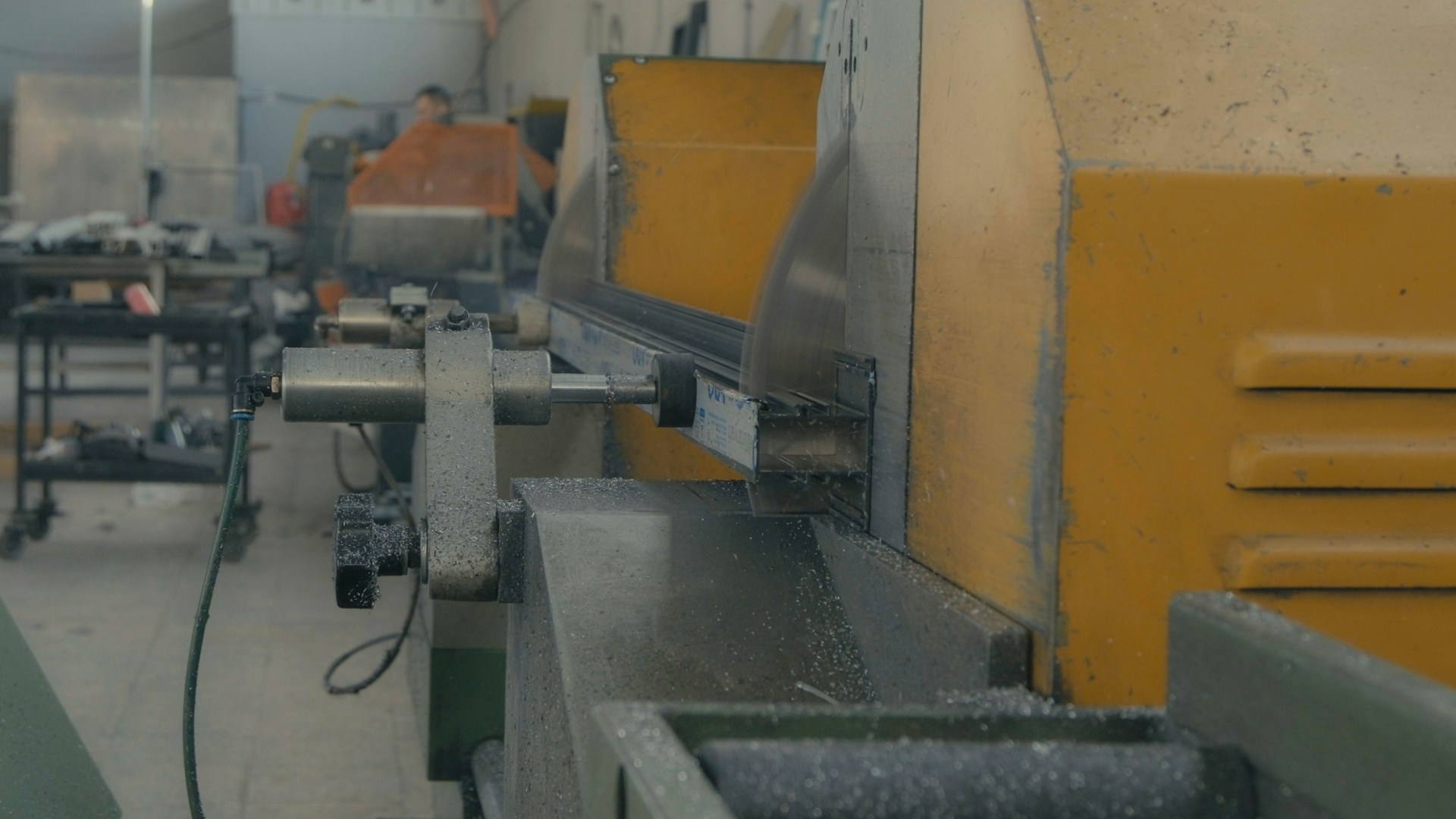
Few decisions on the shop floor carry as much weight as the blades running through your saws. Choose the wrong one, and you’re looking at slower cycle times, frequent blade changes, wasted material, and crews standing idle while equipment is serviced. Choose the right one and the entire production line shifts into another gear.
This post breaks down how manufacturers, fabricators, and steel service centers can get more from every cut by understanding blade construction, matching blades to materials, dialing in operating parameters, and building maintenance habits that extend blade life.
Whether you’re cutting mild steel in high volumes or working through exotic alloys, the principles outlined here apply directly to your bottom line. Heavy-duty cutting is not just about raw power. It’s about the intelligent pairing of tools and applications. Read on to learn how to make that pairing work in your favor.
How Blade Construction Affects Heavy-Duty Cutting Performance
Every blade is an engineering decision before it ever touches metal. The materials used, the tooth geometry, and the manufacturing tolerances built into a blade determine how it performs under pressure, literally.
Bi-Metal vs. Carbide-Tipped: Which Industrial Saw Blade Is Right for You?
Bi-metal blades bond a high-speed steel tooth strip to a fatigue-resistant alloy steel backing. They handle a wide range of structural materials, deliver consistent performance in interrupted cuts, and remain cost-effective for general fabrication work.
Carbide-tipped blades operate at a different level. For high-volume production cutting of stainless steel, titanium, nickel alloys, and other superalloys, carbide tips withstand extreme heat and chip loads that would prematurely dull bi-metal alternatives. M. K. Morse’s carbide-tipped industrial saw blades, such as the M-Factor GES, are purpose-built for these demanding applications.
Key construction factors that influence performance include:
- Tooth geometry: Rake angle, gullet depth, and set pattern all affect chip evacuation and cutting speed
- Tooth pitch (TPI): Finer pitches suit thin-walled or small-section material; coarser pitches handle large billets and solid bar
- Backing steel: Fatigue resistance in the backing determines how long a blade survives the stress of high-cycle production
- Weld quality: For band saw blades, a precision weld is critical, an inconsistent joint introduces vibration and accelerates wear
Understanding these variables is the foundation of any serious efficiency improvement effort.
Matching the Right Blade to Your Material and Application
A blade optimized for mild steel structural cutting will struggle against a stainless billet. The same logic applies across every material category. Matching blade specifications to material hardness, cross-section, and cut frequency is how manufacturers reduce cost-per-cut and extend blade service life.
How to Select Industrial Saw Blades for Stainless Steel and Exotic Alloys
Stainless steel and exotic alloys, Inconel, Hastelloy, titanium, work-harden rapidly. That means a blade running too slowly or with the wrong geometry will heat the material surface, increasing cutting resistance with every pass. The correct approach:
- Use carbide-tipped blades for sustained production runs on stainless and superalloys
- Select a lower TPI to manage chip load and prevent tooth loading in large cross-sections
- Apply adequate cutting fluid to control heat and evacuate chips efficiently
- Reduce feed pressure on work-hardening materials to avoid premature tooth failure
For structural steel, solid bar, and tube cutting, bi-metal blades with variable tooth pitch offer the right balance of aggressiveness and longevity. For carbon steel in high volumes, the optimal TPI and set pattern depend on the cross-section being cut.
M. K. Morse manufactures blades for band saws, circular saws, and hole saws across all major material categories—including carbide and diamond-grit options for the most demanding industrial environments.
Optimizing Operating Parameters for Maximum Production Efficiency
Even a well-chosen blade underperforms when the machine settings are wrong. Band speed, feed rate, and blade tension interact to determine both cut quality and blade life. Getting these parameters right is one of the fastest ways to improve production efficiency without changing equipment.
What Band Speed and Feed Rate Settings Deliver the Best Results?
The goal is to remove material efficiently without generating excessive heat. Too fast a band speed on hard materials accelerates tooth wear. Too slow a feed rate on mild steel wastes cycle time and can work-harden the cut surface.
General guidelines:
- Hard materials (stainless, tool steel, Inconel): Lower band speed, moderate feed pressure, high-flow coolant
- Mild steel and structural profiles: Higher band speed, controlled feed rate, intermittent or flood coolant
- Aluminum and non-ferrous materials: High band speed, light feed pressure, air blast or mist coolant
Blade tension is equally important. An under-tensioned blade deflects under load, producing crowned or angled cuts. An over-tensioned blade fatigues faster. Always follow the machine manufacturer’s tension specifications, and verify with a tension gauge where possible.
Feed force should be calibrated to produce consistent, curled chips. Powdery chips indicate too little feed pressure; thick, discolored chips signal too much. Either condition shortens blade life and compromises cut quality.
Building a Blade Maintenance Program That Reduces Downtime
Reactive blade management—replacing blades only after they fail—is one of the most expensive habits in any cutting operation. A proactive approach extends blade life, prevents unexpected downtime, and gives production planners accurate data for scheduling.
What Does an Effective Industrial Blade Maintenance Routine Look Like?
A structured maintenance program covers four areas:
- Break-in procedure: New blades must be broken in gradually. Start at 50% of normal feed rate for the first 50–100 square inches of cutting, then step up to full production rate. This hones the tooth edges and prevents micro-chipping on fresh carbide or HSS teeth.
- Regular inspection: Check blade backs for fatigue cracks, especially near the weld zone. Inspect tooth condition for chipping, rounding, or uneven wear patterns that indicate a parameter or application mismatch.
- Cleaning and coolant system maintenance: Dirty coolant degrades lubrication and accelerates wear. Clean the coolant tank regularly, maintain correct concentration levels, and ensure nozzles deliver fluid directly to the cut zone.
- Tracking cut data: Log blade life in square inches cut per blade. Over time, this data reveals which blades perform best on which materials—and when it’s time to optimize specifications.
M. K. Morse provides complimentary technical service, including equipment and process evaluations, to help customers build blade programs that maximize both performance and blade longevity.
Leveraging Technical Support and Custom Blade Solutions
Blade selection is not always straightforward. Unusual machine widths, exotic material grades, tight tolerance requirements, or high-cycle production environments often call for input from specialists who understand both the cutting science and the available tooling options.
How Can Technical Support Help Optimize Industrial Saw Blade Selection?
M. K. Morse offers an online selection tool called BladeWizard, along with access to a dedicated technical sales team that recommends the right tooth pitch, speed, feed rate, and blade style for specific applications. This support is particularly valuable for operations cutting:
- Large billets and structural sections where cross-section variation affects TPI selection
- Stainless and high-alloy steels where incorrect blade choice leads to rapid failure
- Mixed-material runs where a single blade specification must perform across multiple grades
All M. K. Morse industrial saw blades are custom welded to length, meaning the correct width, thickness, and TPI can be specified for virtually any machine configuration. For operations running non-standard equipment, this eliminates the need to compromise on blade specifications.
The company’s global network of weld centers and field technicians extends this support into the field—optimizing cutting processes directly on the shop floor rather than relying on general recommendations.
Calculating and Reducing Cost-Per-Cut Across Your Operation
Blade price is one line item. Cost-per-cut is the metric that actually matters. A blade that costs twice as much but lasts four times longer while cutting faster delivers a significantly lower cost-per-cut—and less machine downtime.
How Do You Calculate Cost-Per-Cut for Industrial Saw Blades?
The formula is straightforward:
Cost-per-cut = (Blade cost + Labor + Coolant + Downtime cost) ÷ Number of cuts per blade
To reduce cost-per-cut, manufacturing teams should:
- Track blade life accurately (cuts or square inches per blade life)
- Compare blade specifications across equivalent applications before assuming the cheaper option is more economical
- Account for downtime cost when a blade fails mid-run or requires early replacement
- Evaluate feed rate improvements that reduce cycle time without accelerating blade wear
For high-volume fabrication shops and steel service centers, even a 10–15% improvement in blade life compounds significantly across thousands of cuts per month. Selecting the right manufacturing tools from the outset—and supporting them with correct operating parameters—is the most direct path to measurable efficiency gains.
The Long Game: Cutting Smarter for Sustainable Production Gains
Efficiency on the cutting floor is not a one-time fix. It’s the result of consistent attention to blade selection, machine setup, operating parameters, and maintenance discipline.
Each element reinforces the others. A well-chosen blade running at correct speed and feed, properly tensioned, and supported by clean coolant and regular inspection will consistently outperform the same blade in a poorly managed environment.
For operations serious about production efficiency, the starting point is a systematic review of current blade specifications and operating conditions. From there, incremental improvements—a better-matched blade grade here, a refined feed rate there—accumulate into measurable reductions in cost-per-cut and downtime.
M. K. Morse has been building precision cutting solutions for over 50 years from their manufacturing facility in Canton, Ohio. Their full industrial lineup, technical support tools, and custom welding capabilities make them a practical resource for any operation looking to get more from its heavy-duty cutting processes. Explore the complete range of industrial saw blades to find the right solution for your application.